Top 20 Folate Containing Foods

Top 20 Folate Containing Foods

Share This Post

While MTHFR gene mutations can inhibit the conversion of folate you eat (dihydrofolate) into the active folate (5-MTHF), is it still vitally important to consume as much natural folate as you can through your diet.

Is it important to remember, a mutation in the MTHFR gene simply means a reduction in function, not that it has shut down completely! So, the more natural folate you consume, the more folate your MTHFR gene will have to convert into the all important active folate.

You can read more on the uses of active folate in the body on our ‘What is MTHFR’ page. 

Consuming your folate through the diet also reduces your reliance on supplementation, allowing your diet to provide the nutrition your body needs, just the way nature intended.

And remember, eating these folate-rich foods means you are also receiving the benefits from the many other nutrients and phytochemicals they contain. So eat up, and enjoy!

10 day FREE email course

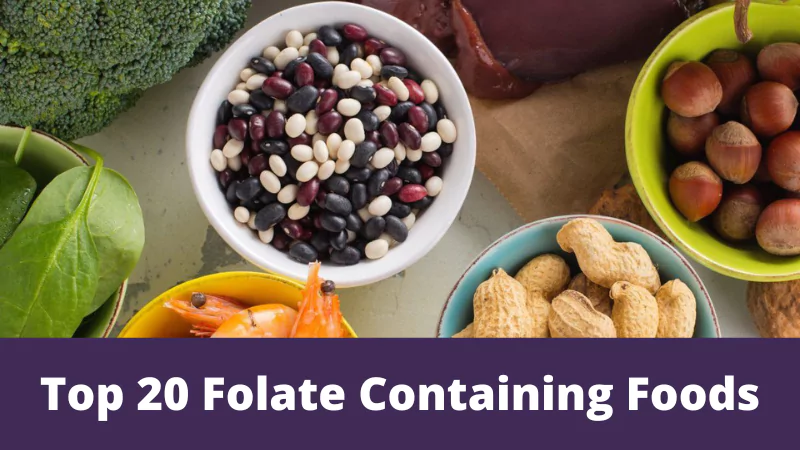
Top 20 Folate Containing Foods

(Content of natural folate in microgram’s per 100 gram serving of food)

  1. Duck liver (raw)                                              738mcg
  2. Mung beans (raw)                                          625mcg
  3. Chickpea /besan flour                                   437mcg
  4. Leek (freeze-dried)                                        366mcg
  5. Wheat germ                                                    281mcg
  6. Peanuts (raw)                                                 240mcg
  7. Sunflower seeds (toasted)                           238mcg
  8. Red capsicum/ peppers (freeze-dried)      229mcg
  9. Spinach (raw)                                                 194mcg
  10. Asparagus (frozen)                                        191mcg
  11. Mustard greens (raw)                                   187mcg
  12. Quinoa (uncooked)                                       184mcg
  13. Lentils (cooked)                                             181mcg
  14. Kelp seaweed (raw)                                      180mcg
  15. Collard greens (raw)                                     166mcg
  16. Lima beans (cooked)                                    150mcg
  17. Black beans (cooked)                                   149mcg
  18. Egg yolk (raw)                                                146mcg
  19. Cos or Romaine lettuce (raw)                     136mcg
  20. Kidney beans (cooked)                                130mcg

Information sourced from NutritionData.Self

10 day FREE email course


Related Posts

Blueberry, Chia + Banana Pancakes
MTHFR

Blueberry, Chia + Banana Pancakes

Ingredients: Makes 6 pancakes 100 g (1 cup) almond meal (see notes on nut free and high protein option) 1 tablespoon chia seeds or ground flaxseeds ...
Read More →
Why are foods fortified with folic acid?
MTHFR

Why are foods fortified with folic acid?

When it comes to fertility, we know that folate is one of the most important nutrients needed for miscarriage prevention as it directly impacts the ...
Read More →
Matcha Chia Pudding
MTHFR

Matcha Chia Pudding by Teresa Cutter

Ingredients: Serves 1 3 tablespoons (40 g / 1/2 oz) white chia seeds 1 teaspoon Healthy Chef Matcha 1 tablespoon Healthy Chef Protein 250 ml ...
Read More →
DIY Lavender Bath Bombs
MTHFR

DIY Lavender Bath Bombs

Ingredients: Makes around 5 medium bath bombs 500 g / 3/4 cup baking soda 1 cup non GMO citric acid  1/2 tsp purple Brazilian clay  ...
Read More →
Conditions

The Essential First Steps for Assessing Patients Using Genetic, Blood, and Organic Acid Tests

Integrating genetic, blood, and organic acid testing into patient care can provide profound insights into an individual’s health. However, to make the most of these ...
Read More →
Histadelia vs. Histapenia
MTHFR

Histadelia vs. Histapenia

Histadelia vs. Histapenia: Does the Pfeiffer protocol always make sense? Understanding Your Histamine Blood Test Results Histamine is most popularly known for its role in ...
Read More →
Scroll to Top
Carolyn Ledowsky

Stay Connected!

Sign up for our monthly newsletter with current MTHFR research, health tips, recipes, special offers and news about upcoming events including Carolyn’s live Q&A.

Subscribe