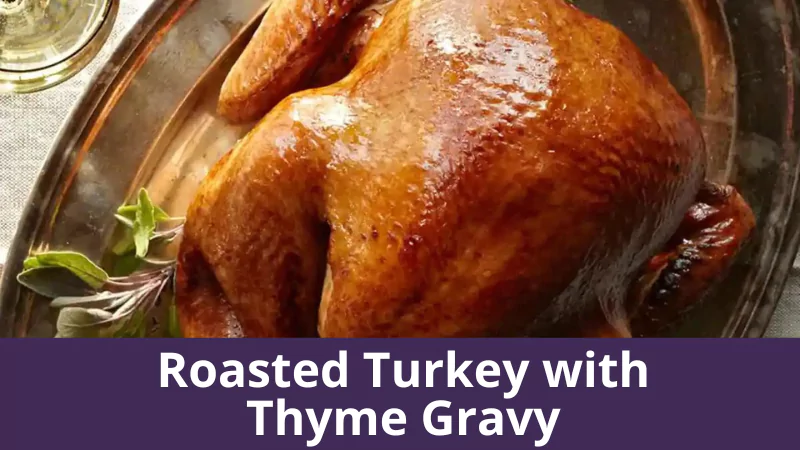
Ingredients:
- 1 fresh turkey (12 to 14 lbs.), neck reserved and giblets saved for another use
- 1/2 bunch fresh thyme
- 1 1/2 sticks (6 oz/170gms) unsalted butter, softened
- coarse salt and pepper
- 1 lemon, halved
- 2 inner ribs celery with leaves, halved
- 1 onion, halved
- 3 tablespoons flour
Method:
- Let the turkey stand at room temperature for at least 1 hour before roasting. Meanwhile, strip the leaves from half the thyme sprigs; chop. Reserve the remaining sprigs. In a bowl, combine 1 stick of butter and 2 tbsp. of the chopped thyme; season with salt and pepper.
- In a medium saucepan, combine 6 cups of water, the turkey neck and remaining chopped thyme. Partially cover and simmer until broth is reduced by half, about 40 minutes. Let cool slightly, then strain.
- Pat the turkey dry inside and out. Carefully slide your fingers between the skin and the meat. Spread the butter mixture under the skin, pushing it into the pockets created by the loosened skin, coating evenly. Season the main cavity, then stuff with the reserved thyme sprigs, the lemon, celery and onion; stuff the neck cavity with any aromatics that wont fit. Season the turkey all over. Using kitchen twine, tie the legs together at their ends. Tuck the wings behind the turkey, if desired.
- Position a rack in the lowest part of the oven and preheat to 400°F/204°C. In the microwave or a small saucepan, melt the remaining 1/2 stick butter. Loosely place a sheet of foil on a roasting rack and transfer to a roasting pan. Place the turkey breast side down on the prepared rack. Roast for 45 minutes, then remove from the oven and use gloved hands to turn the turkey breast side up, sliding out and discarding the foil. Roast again, basting halfway through with the melted butter, until the skin is golden brown and a thermometer inserted into the thigh registers 155°F/68°C, 45 minutes to an hour. Transfer the turkey to a carving board and tent with foil; let rest for 30 minutes.
- Meanwhile, pour off and reserve the drippings from the roasting pan; skim and discard all but about 3 tbsp. of the fat. Place the roasting pan on the stovetop over two burners and heat over medium-high heat. Whisk in the flour and cook, whisking constantly, until browned. Add the reserved drippings and the homemade turkey broth. Bring to a boil, then lower the heat and simmer, whisking occasionally, until the gravy is thickened, about 5 minutes. Stir in the remaining chopped thyme. Serve warm with the sliced turkey.