The Many Benefits of Serotonin
Serotonin is recognized as the “happy hormone” but many people don’t know much more than that. It can be very helpful to offer patients a broader view of serotonin and help them recognize how they can support proper levels. Explaining the many ways that it is used in the body can help people identify the symptoms they may be having. Proper serotonin levels are necessary for:
- Stable mood;
- Quality sleep (as serotonin converts to melatonin);
- Suppressed/reasonable appetite;
- Proper digestion;
- Regular elimination;
- Healing; and
- Communication between the nervous system and brain
How We Produce Serotonin
The amino acid Tryptophan is the precursor for serotonin production and some of the foods that offer good levels are:
- Free-range chicken and turkey;
- Lamb, rabbit and other game;
- Lean red meat and pork;
- Wild-caught fish;
- Shellfish;
- Soybeans and tofu;
- Beans;
- Milk and cheese;
- Nuts and seeds;
- Oats and other grains;
- Eggs;
- Bananas;
- Pineapple;
- Avocado;
- Potatoes (with skin); and
- Spirulina.
Possible interference in serotonin can be:
- Poor diet;
- Imbalanced microbiome;
- Compromised digestive tract (from extended illness, bariatric surgery or other digestive infringement);
- Chronic stress;
- Past traumas (especially coupled with certain gene SNPs);
- Lack of sunlight exposure;
- Inadequate exercise; and
- Genetic variants that interfere in the production, transport or utilization of serotonin.
- LPS/Inflammation causes an upregulation of the Kyneurine pathway to steal tryptophan away from serotonin production to support eradication and reduction of inflammation.
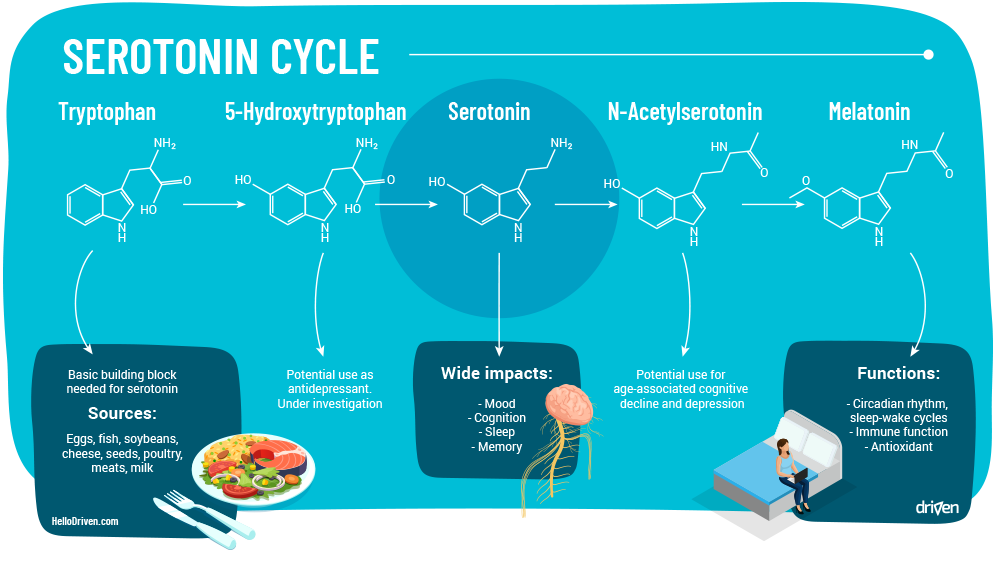
Image credit to: hellodriven.com
A Few Genes to Consider
MAOA is involved in the breakdown of serotonin, epinephrine, norepinephrine and dopamine.
Dysregulation of this gene can have an effect on mood, sleep and appetite when serotonin isn’t broken down properly and can often result in depression.
When epinephrine and norepinephrine aren’t handled properly it can be more difficult to manage stress. Poor dopamine processing can result in choppy, dysregulated movements. MAOA also helps break down dietary monoamines, particularly tyramine found in cheese. MAOA appears to have a role in normal brain development before birth and is involved in apoptosis throughout development.
SLC6A4 (SERT) is a sodium-dependent serotonin transporter that is critical in regulating the level of the neurotransmitter in the brain and gut. When this gene is considered to be hypermethylated, it is related to lower 5-HTT mRNA levels. This has been connected to low levels of serotonin and has been linked to suicide ideation in a post-stroke research study. The status of SLC6A4 should be considered when deciding whether or not to take an SSRI. At least one study found that homozygous status for SLC6A4 was associated with poor response to SSRI treatment of depression.
Serotonin receptors on the cells that receive the serotonin are HTR1A, HTR1B and HTR2A. Variants on these receptor genes have been linked to stress coping capability, both passive coping and active.
It is very clear that you can offer patients an advantage in their quality of life when you educate them about their neurotransmitter genes.
Knowing this information can help them resolve or prevent symptoms and even clarify if a medication is best suited for them. To learn about additional aspects of neurotransmitters, be sure to follow the Facebook posts this month (March 2021).
If you would like to know more about how genetic susceptibility of serotonin based genes may affect your patients’ health, why not consider our Practitioner mastermind program or Institute learning program.
References:https://medlineplus.gov/genetics/gene/maoa/https://pubmed.ncbi.nlm.nih.gov/28293733/https://www.hormone.org/your-health-and-hormones/glands-and-hormones-a-to-z/hormones/serotoninhttps://bmcpsychiatry.biomedcentral.com/articles/10.1186/s12888-018-1850-4