Ingredients:
Makes enough for 8 people
- 2 white onions
- 4 cloves of garlic
- 4 medium carrots
- 2 cups of butternut squash cut into cubes
- 2 medium big red beets
- 2–4 sticks of celery
- 1 yellow zucchini
- 2 apples, rather sour than sweet
- 1 Tbsp olive oil or coconut oil
- 2 cups of bone broth
- 1 cups of water (leave out if you are making a base for lasagna sauce)
- 1 Tsp of apple cider vinegar (optional)
- 1 handful of basil
- 1 handful of mixed green herbs (rosemary, thyme, oregano, sage, lemon balm)
- salt to taste
Method:
- Clean and chop up all of the vegetables.
- Heat up the (extra virgin) olive oil and add the celery and onion to the pot and cook, stirring a few times, until the onions are translucent.
- Add the garlic, and let it cook with the onion and celery for a bit – don’t let it brown.
- Add in the rest of the vegetables, the apples, the bone broth/bouillon, water, a Tsp of apple cider vinegar, salt, a handful of basil and a handful of mixed green herbs of your choice (I used a mix of herbs I have in the garden, rosemary, thyme, lemon thyme, oregano, sage, and a bit of lemon balm).
- Bring it to the boil, turn down the heat and let it simmer for about 30 minutes (the longer you cook it the less red/more orange it will become).
- Let it simmer till all of the veggies are soft, but the beets still have a little bite. Blend till you get the texture you prefer. I prefer to not blend it till it is completely smooth, but leave a bit of texture in there.
- Salt to taste and if you prefer, add a bit more apple cider vinegar. If you don’t tolerate apple cider vinegar, you can also leave it out completely, but in that case I would recommend you make sure to choose a sour apple for the sauce.
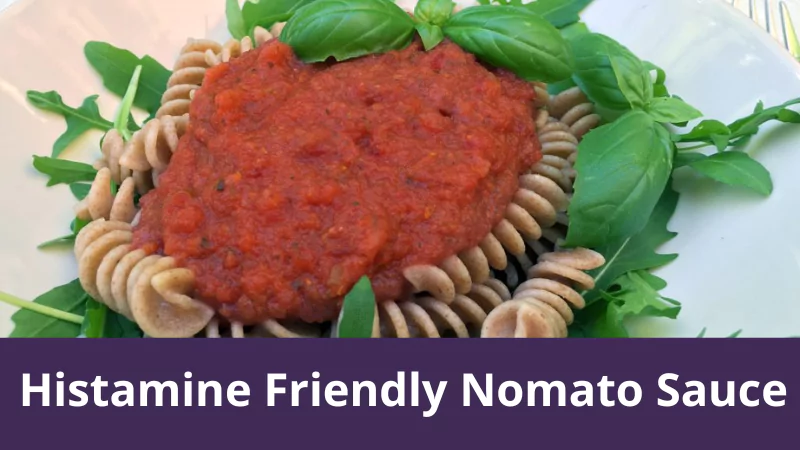
- Enjoy it plain with some pasta or spiralized vegetables. Or you can use it as a base for other pasta sauces, as a pizza sauce, or to make tomato free lasagna, just to mention a few options.
From: The Histamine Friendly Kitchen