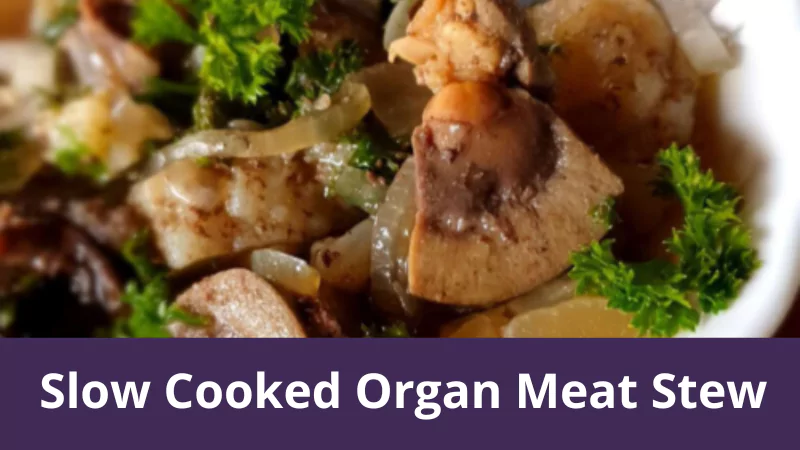
This slow cooked organ meat stew is a great opportunity to load up on our favorite anti-inflammatory herbs and spices.
Ingredients:
- 1.8 kg / 4 lb organ meats I used 2 heart, 1 liver, 1 kidney
- 1 medium pearl onion
- 1 head garlic
- 10 cms / 2 inches fresh ginger root or 2 Tsp dried powder
- 10 cms / 2 inches fresh turmeric root or 2 Tsp dried powder
- 4 ribs celery
- 4 cups leafy greens chopped chard, spinach, nettle etc.
- 1 small cauliflower or broccoli
- 1 Tsp whole black peppercorn
- 1 Tsp dried thyme
- 1/4 cup fresh parsley chopped
- 1/2 cup wild mushrooms dried, soaked and cut
- 1.9 litres / 8 cups bone broth
- 1/3 cup cooking fat or oil tallow, butter, ghee or coconut oil
Method:
- If following oven method: Preheat oven to 300* and put the rack in the lowest position to allow room for a large pot. If you want to do this on a slow cooker, skip to the next step.
-
Prepare organ meats by cutting heart, liver and kidney to 1 inch cubes. If there are any large vessels, sinew, connective tissue or other unpalatable bits, cut them off, feed to your dog or otherwise discard. The heart and kidneys usually have some fat attached to them, I choose to leave it on.
-
Set meat aside and prep veggies and herbs by chopping onion and garlic and mincing the fresh roots. Rinse the other herbs and vegetables, remove leafy greens from stem and chop coarsely to bite sized pieces.
-
Begin browning organ meats in tallow, butter, ghee or coconut oil. On low heat add a potion of fat to a stock pot and sauté organ meats, stirring frequently until brown on all sides. Do the meat in 2 separate batches, half of the total chopped meat at a time. Save all browned meat and juices aside in a bowl.
-
Add more fat to the pot if needed, sauté onion, garlic, ginger and turmeric root and celery. Stir around for a few minutes until onions are translucent and the mixture smells flavorful.
-
Add meat back to the pot.
-
Add in chopped mushrooms, greens and optional cauliflower.
-
Pour in bone broth.
-
Bring to simmer on the stove top or if you are using a crock pot, transfer to your slow cooker/crock pot and turn on low, leave for 6-8 hours.
-
Back to the stove top method – Once the pot reaches a simmer, take it off the flame and place in the oven and keep covered at 300* for 4 – 5 hours.