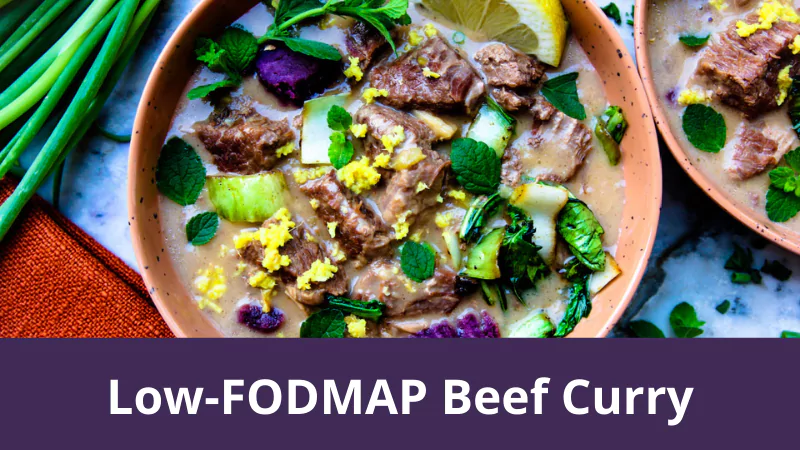
Low-FODMAP Beef Curry is full of vibrant flavors, yet is gentle to digest. The easy “dump and cook” Instant Pot cooking creates a rich thick broth and tender meat.
Choose which vegetables you use based on your diet! … Lots of variety makes this a fun dinner that you can even vary with the seasons.
If Paleo or Whole30, you have a broad number of Low-FODMAP veggies from which to choose! For AIP and Keto, a long list of veggies is still yours! See these lists below.
I think everyone will be pleased with just how many vegetables you can actually enjoy on a Low-FODMAP diet.
This recipe is also Gluten-free.
Which vegetables to use in Low-FODMAP Beef Curry
One thing I love about this recipe is how it suits different diets really well, all based on the vegetables you choose! So below, I’ve listed the best options for you, based on your diet.
If you don’t have any restrictions beyond Low-FODMAP, such as Paleo, Whole30 or Gluten-free diets, choose the veggies you like best.
Low-FODMAP and AIP Stew Vegetables
- parsnips
- bok choy
- carrots
- pumpkin
- rhubarb
- all winter squash (for some)
- spinach
- sweet potatoes or yams
- zucchini
- the green part of green onions
- small amounts of garlic
- most fresh herbs
- ginger
Low-FODMAP and Keto Stew Vegetables
- bell peppers
- bok choy
- daikon radish
- eggplant
- rhubarb
- spinach
- tomatoes
- turnips
- zucchini
- the green part of green onions
- small amounts of garlic
- most fresh herbs
- ginger
How to make Low-FODMAP Beef Curry
Low-FODMAP Beef Curry is a “dump and cook” easy recipe, super fast to assemble!
- Place water, beef and sea salt into Instant Pot insert.
- Add all chopped veggies and fresh ginger.
- Press “Meat/Stew” button, and cook 35 minutes. Allow pressure to release naturally for 45 to 60 minutes.
- In a small dish, whisk together coconut milk, arrowroot and tamarind.
- Make sure the stew is no longer simmering. Whisk the tamarind mixture into the hot stew, and watch for it to thicken. Stir in greens of green onions.
- Serve, topped with fresh mint and an optional side of lemon wedge to squeeze in.