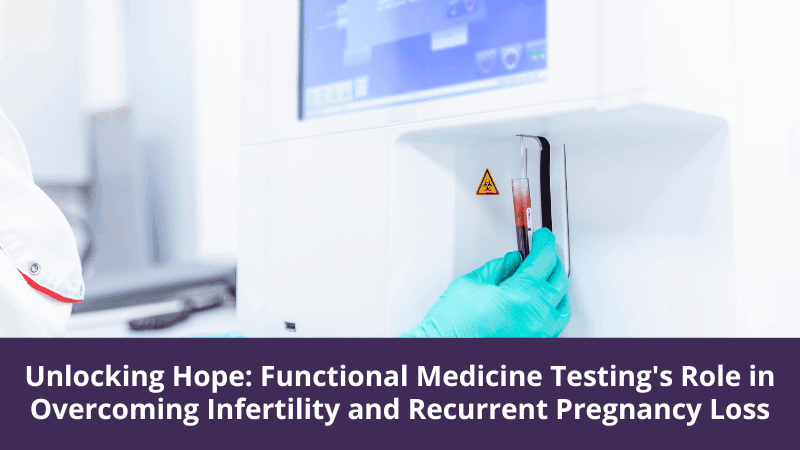
For couples navigating the challenging journey of infertility and recurrent pregnancy loss, the quest for answers often leads them to explore options outside of the General Practitioners and IVF clinics. One such avenue that has gained prominence is Functional Medicine Testing — a holistic approach that seeks to unravel the intricate web of health imbalances contributing to these struggles.
In this blog, we delve into the benefits of Functional Medicine Testing in the context of infertility and recurrent pregnancy loss, shedding light on its potential to bring hope and transformation.
Understanding Functional Medicine Testing: A Holistic Approach
Functional Medicine is distinct from allopathic medicine because it adopts a holistic view of health. This is a perspective that understands the body as an interconnected network of systems rather than isolated parts. Unlike conventional medicine, which often treats symptoms in isolation, Functional Medicine seeks to identify the root causes of health challenges. When applied to infertility and recurrent pregnancy loss, this approach offers a promising framework for uncovering factors that may be inhibiting conception or successful pregnancies.
Personalised Insights: The Key to Unlocking Solutions
One of the standout benefits of Functional Medicine Testing is its focus on personalisation. Each individual’s health profile is unique, and so are the factors contributing to infertility or recurrent pregnancy loss. Functional Medicine Tests delve into genetic predispositions, lifestyle choices, environmental exposures, and intricate biochemical imbalances that might be playing a role. This individualised insight enables healthcare practitioners to craft targeted interventions that address the specific imbalances affecting fertility.
Uncovering Underlying Causes: A Path to Resolution
Conventional medical testing often centres on diagnosing specific diseases based on recognised symptoms. This is valuable for certain individuals, but for those who do not have a definable disease, there is often no “next step”. However, Functional Medicine Testing seeks to uncover the underlying causes that might not yet have developed into diagnosable conditions. For instance, hormonal imbalances, inflammation, nutritional deficiencies, and gut health issues could be contributing to fertility challenges. By identifying these root causes, Functional Medicine empowers individuals to address them directly, potentially leading to improved fertility outcomes.
Empowerment Through Lifestyle Interventions
Functional Medicine doesn’t stop at identifying imbalances; it extends to empowering individuals to take charge of their health. After uncovering insights through testing, healthcare practitioners work with patients to develop personalised lifestyle interventions. These interventions can include dietary adjustments, exercise routines, stress management techniques, and targeted supplementation. By addressing the underlying factors through these changes, individuals can create significant changes that can positively impact the egg and sperm quality, hormones and reproductive function, leading to conception and healthy pregnancies.
Prevention and Longevity: A Vision for the Future
Beyond its immediate benefits, Functional Medicine Testing aligns with a preventive approach to health. By identifying imbalances and addressing them early, individuals may reduce their risk of chronic diseases and improve their overall well-being. This preventive mindset has profound implications for the journey toward parenthood, as individuals can create a foundation of health that supports not only conception but also long-term vitality throughout the pregnancy, often reducing risks for serious conditions such as pre-eclampsia, gestational diabetes, infections, hypertension, foetal growth restriction, preterm birth and more. Additionally, creating a healthy start that may support lifelong health in the child.
The Marriage of Functional Medicine and Allopathic Testing
It’s important to note that Functional Medicine Testing doesn’t stand in opposition to conventional Allopathic Testing; rather, the two can complement each other. Allopathic Testing excels in acute care scenarios and immediate medical crises, while Functional Medicine Testing shines when it comes to uncovering the underlying complexities of chronic health challenges.
In the realm of infertility and recurrent pregnancy loss, Functional Medicine Testing offers a beacon of hope—a holistic, personalised, and proactive approach to addressing the intricate factors that impact fertility. By seeking insights, understanding root causes, and embracing personalised interventions, individuals and couples can embark on a journey toward parenthood with renewed optimism and determination. Through the lens of Functional Medicine, the path to conception becomes a journey of empowerment and possibility.