The Role of Reverse T3 in Thyroid Dysfunction: A Practical Guide for Practitioners

Share This Post

The Role of Reverse T3 in Thyroid Dysfunction: A Practical Guide for Practitioners

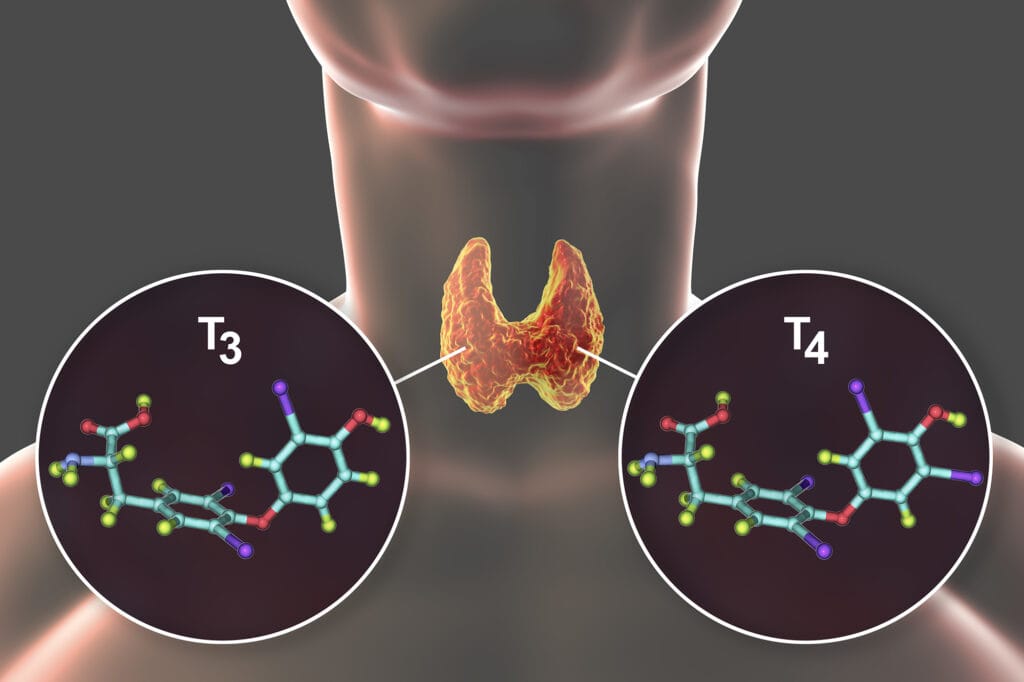
Reverse T3 (rT3) plays a crucial role in thyroid health, often serving as a marker of the body’s response to stress, illness, or metabolic dysregulation. While rT3 is biologically inactive, it competes with active T3 for receptor binding, effectively slowing metabolic activity. Elevated rT3 can lead to symptoms of hypothyroidism despite normal TSH, T4, and T3 levels.

In this practical guide, we’ll explore the role of rT3 in thyroid dysfunction, how to identify elevated levels, and effective strategies for managing this common yet underdiagnosed issue.


Understanding Reverse T3

Reverse T3 is produced when the body converts T4 (thyroxine) into an inactive form of T3. This process is mediated by the enzyme DIO3 (deiodinase type 3), which inactivates thyroid hormones under specific conditions.
Would you like to read the full article?

This content is an exclusive benefit to Functional Genomics Institute members. PREMIUM MEMBERS GET ACCESS TO:

  • Premium Articles like this one regarding research updates, functional genetics and specific health concerns
  • Exclusive Ask Me Anything Forum
  • Bi-Monthly Q+A live calls with Carolyn Ledowsky
  • Full access to exclusive video trainings
  • Quarterly Deep-Dive Webinars and Case Studies

LEARN MORE

Already a subscriber? Login here

If you are a member who is logged in and are receiving this message, please ensure the cookies are enabled on your browser.

Related Posts

Genetic SNP's

High homocysteine – it can affect your brain, your heart and your pregnancy.

High homocysteine – it can affect your brain, your heart and your pregnancy. Hyperhomocysteinemia, the condition of having high homocysteine in the blood, causes numerous ...
Read More →
Conditions

What are the ethical and legal considerations of working with genetic information?

Legal implications that practitioners should be aware of when working with genetic information include: Privacy and Confidentiality: Practitioners must comply with data privacy laws, such ...
Read More →
Conditions

What is the difference between genetics, genomics, and epigenetics?

Genetics refers to the study of individual genes and their role in inheritance—how traits and conditions are passed down from one generation to the next. ...
Read More →
Top 20 Folate Containing Foods
MTHFR

Top 20 Folate Containing Foods

While MTHFR gene mutations can inhibit the conversion of folate you eat (dihydrofolate) into the active folate (5-MTHF), is it still vitally important to consume ...
Read More →
Fertility

A Century-Old Procedure Offers New Hope

Does Flushing The Fallopian Tubes Increase Fertility? Recently, infertility was brought into the spotlight throughout the medical community. Specifically, they were highlighting a century’s old ...
Read More →
Pulmonary Embolism
Conditions

Pulmonary Embolism

What is a Pulmonary Embolism Pulmonary embolism describes an obstruction  of the pulmonary artery, or one of it’s branches, by a clot, usually derived from ...
Read More →
Scroll to Top
Carolyn Ledowsky

Stay Connected!

Sign up for our monthly newsletter with current MTHFR research, health tips, recipes, special offers and news about upcoming events including Carolyn’s live Q&A.

Subscribe