Congenital Heart defects

Congenital Heart defects

Share This Post

What is a Congenital Heart Defect?

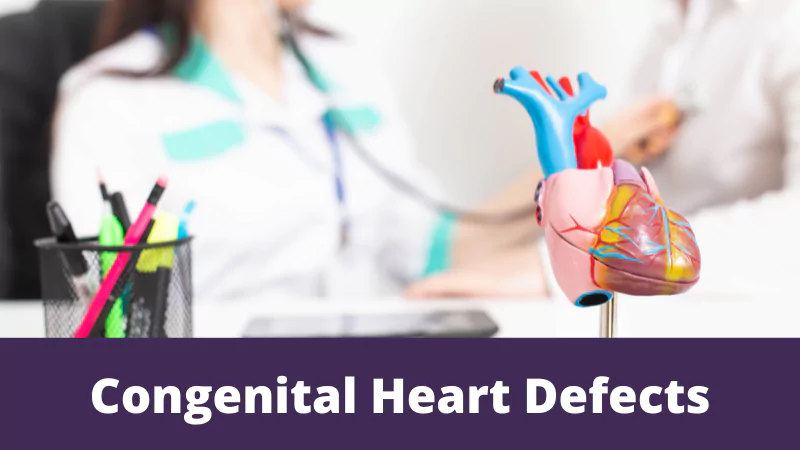
Congenital heart defect (CHD) or congenital heart anomaly is a defect in the structure of the heart and great vessels which is present at birth. Many types of heart defects exist, most of which either obstruct blood flow in the heart or vessels near it, or cause blood to flow through the heart in an abnormal pattern. Other defects, affect the heart’s rhythm.

Heart defects are among the most common birth defects and are the leading cause of birth defect-related deaths. Approximately 9 people in 1000 are born with a congenital heart defect. Many defects don’t need treatment, but some complex congenital heart defects require medication or surgery.

Research

A study completed by Hobbs et al (2010) examined the prevalence of MTHFR mutations in women with CHD affected pregnancies. Results showed that women carrying a CHD pregnancy were 1.5 times more likely to be obese when compared to women in the control group. Obese women in the study group (not control) carrying the 677TT mutation were also found to be 4.6 times more likely to have a CHD affected pregnancy when compared to women with the C677C genotype of a normal weight. Furthermore, the presence of the A allele in the BHMT gene also lead to 1.8 increased risk of a C pregnancy, when compared with women of a normal weight with the GG genotype.

Article Here


Related Posts

MTHFR and Hormones
MTHFR

MTHFR and Hormones

MTHFR and Hormones Many women with MTHFR experience excessive mood swings and may experience other symptoms related to fluctuations in hormone levels. Methylation issues can ...
Read More →
American Heart Association should re-think their status on MTHFR mutations
MTHFR

American Heart Association should re-think their status on MTHFR mutations

Recently Stephan Moll and Elizabeth Varga wrote on Homocysteine and MTHFR Mutations in this months American Heart Association journal, while much of the information about homocysteine ...
Read More →
DAO Deficiency and Histamine: The Unlikely Connection
Genes

DAO Deficiency and Histamine: The Unlikely Connection

What does it mean? We live in a time when we can choose what to eat. But in our endeavour to be healthy, what are ...
Read More →
Fertility

Bisphenol A: Why It’s Bad and How to Avoid It

BPA or Bisphenol A is a common chemical found in plastics and has been in large scale industrial use since the 1960’s. This chemical is ...
Read More →
MTHFR

MTHFR and the Brain: Untangling the Genetic and Biochemical Links to Neurological and Psychiatric Disorders

When we talk about MTHFR polymorphisms, most practitioners think about methylation, cardiovascular risk, or pregnancy complications. But increasingly, the research is pointing to a different ...
Read More →
How does histamine effect our brain and nervous system?
MTHFR

How does histamine effect our brain and nervous system?

Histamine is a natural substance produced by the human body and is a substance with many important functions. Histamine was first isolated in 1907 by ...
Read More →
Scroll to Top
Carolyn Ledowsky

Stay Connected!

Sign up for our monthly newsletter with current MTHFR research, health tips, recipes, special offers and news about upcoming events including Carolyn’s live Q&A.

Subscribe