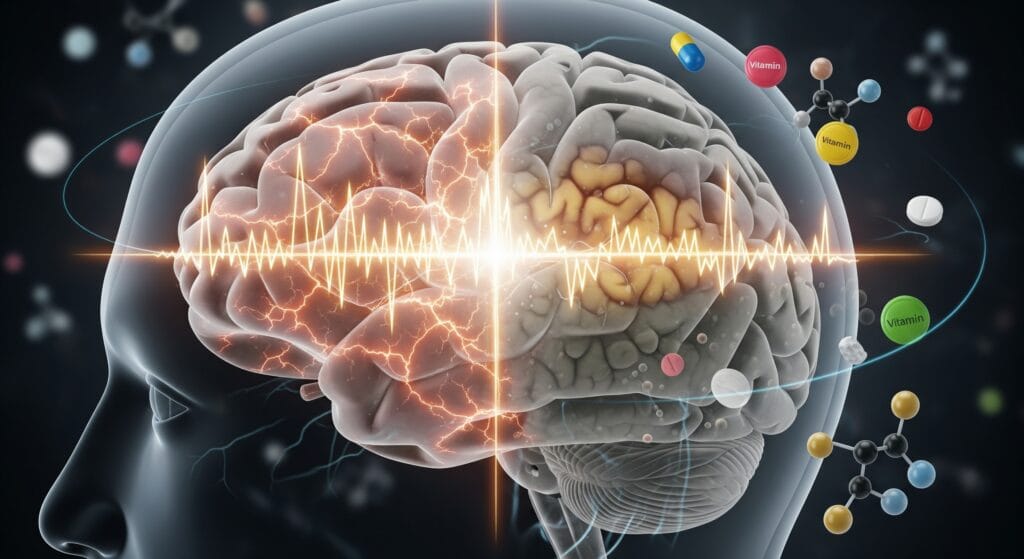
The Seizure Vitamin: What PLP Deficiency Teaches Us About the Brain

Share This Post

What vitamin B6’s active form (PLP) reveals about enzyme fidelity, neurological resilience, and why ‘more B6’ isn’t always the right answer.

The B Vitamin We Thought We Understood

Ask any clinician to name the functions of vitamin B6, and you’ll hear the usual suspects: amino acid metabolism, neurotransmitter synthesis, perhaps a nod to its role in methylation. But as we continue to study pyridoxal 5’-phosphate (PLP)—the bioactive form of B6—it becomes clear that we’ve vastly underestimated both its functional scope and its fragility.

PLP is one of the most reactive molecules in human biochemistry. It doesn’t just act; it interacts—with enzymes, neurotransmitters, dietary amino acids, and alarmingly, with endogenous toxins and drug metabolites. And when these interactions go wrong—due to genetic mutations, medication, or metabolic overload—the clinical consequences can range from mild neuropathy to devastating neonatal seizures.

So the question becomes: what happens when the body’s most versatile cofactor loses control?

Would you like to read the full article?

This content is an exclusive benefit to Functional Genomics Institute members. PREMIUM MEMBERS GET ACCESS TO:

  • Premium Articles like this one regarding research updates, functional genetics and specific health concerns
  • Exclusive Ask Me Anything Forum
  • Bi-Monthly Q+A live calls with Carolyn Ledowsky
  • Full access to exclusive video trainings
  • Quarterly Deep-Dive Webinars and Case Studies

LEARN MORE

Already a subscriber? Login here

If you are a member who is logged in and are receiving this message, please ensure the cookies are enabled on your browser.

Related Posts

Clinic Practitioners

Unravelling the Genetic Threads of Diabetes: How Nature, Nurture, and Pregnancy Shape the Future

Introduction: Diabetes, a condition characterised by elevated blood sugar levels, is a complex interplay between genetic susceptibility and environmental influences. Understanding the intricate dance between ...
Read More →
Fertility

A Century-Old Procedure Offers New Hope

Does Flushing The Fallopian Tubes Increase Fertility? Recently, infertility was brought into the spotlight throughout the medical community. Specifically, they were highlighting a century’s old ...
Read More →
Recurrent Miscarriage
Conditions

Recurrent Miscarriage

What is Recurrent Miscarriage/ Pregnancy Loss? Recurrent pregnancy loss is a condition distinct from infertility, and is defined as two or more failed pregnancies. A ...
Read More →
Is High Folic Acid Intake a Risk Factor for Autism
MTHFR

Is High Folic Acid Intake a Risk Factor for Autism?—A Review

AbstractFolate is required for metabolic processes and neural development. Insuring its adequate levels for pregnant women through supplementation of grain-based foods with synthetic folic acid ...
Read More →
How does MTHFR affect your fertility?
Genes

How does MTHFR affect your fertility?

As soon as you plan to get pregnant, it’s pretty normal that you want to know as much as you can about the whole process ...
Read More →
Depression
Conditions

Depression

What is Depression? Depression is a mental state characterised by excessive sadness. It is more than just a low mood – it’s a serious illness ...
Read More →
Scroll to Top
Carolyn Ledowsky

Stay Connected!

Sign up for our monthly newsletter with current MTHFR research, health tips, recipes, special offers and news about upcoming events including Carolyn’s live Q&A.

Subscribe