What are SNPs, and why are they important in clinical practice?

Share This Post

What are SNPs, and why are they important in clinical practice?

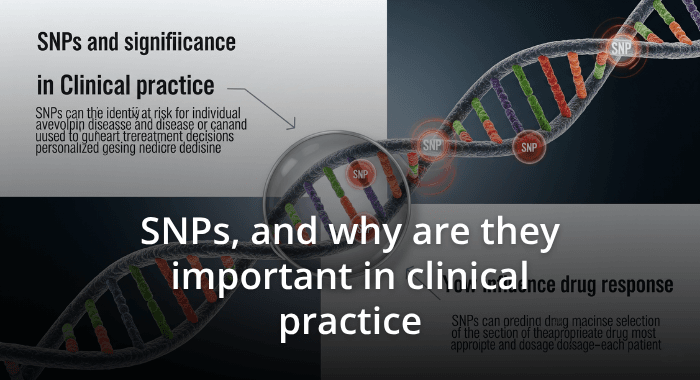
SNPs, or single nucleotide polymorphisms, are the most common type of genetic variation. They occur when a single nucleotide (one of the basic structural units of DNA, represented by the letters A, T, C, and G) is replaced with another at a specific position in the genome. This small change in the genetic code can alter how a gene functions by influencing how it is transcribed into RNA or translated into proteins, or by affecting regulatory regions that control gene expression. While many SNPs have no impact on health, others can influence how genes function and, in turn, affect various biological processes such as detoxification, methylation, neurotransmitter synthesis, or hormone metabolism.

For example, an SNP in the MTHFR gene may result in reduced enzyme activity, impairing the body’s ability to process folate and methylate DNA. Similarly, SNPs in the COMT gene can affect dopamine and estrogen metabolism, influencing mood, stress response, and hormonal balance.


Would you like to read the full article?

This content is an exclusive benefit to Functional Genomics Institute members. PREMIUM MEMBERS GET ACCESS TO:

  • Premium Articles like this one regarding research updates, functional genetics and specific health concerns
  • Exclusive Ask Me Anything Forum
  • Bi-Monthly Q+A live calls with Carolyn Ledowsky
  • Full access to exclusive video trainings
  • Quarterly Deep-Dive Webinars and Case Studies

LEARN MORE

Already a subscriber? Login here

If you are a member who is logged in and are receiving this message, please ensure the cookies are enabled on your browser.

Related Posts

How does MTHFR affect your fertility?
Genes

How does MTHFR affect your fertility?

As soon as you plan to get pregnant, it’s pretty normal that you want to know as much as you can about the whole process ...
Read More →
Folate or Folic?
Genes

Folate or Folic?

You say folate, I say folic acid… let’s call the whole thing off?  Paraphrasing the famous lyrics may help us remember that similar sounding words ...
Read More →
High homocysteine – It can affect your brain, your heart and your pregnancy.
MTHFR

High homocysteine – It can affect your brain, your heart and your pregnancy.

High homocysteine – it can affect your brain, your heart and your pregnancy. Hyperhomocysteinemia, the condition of having too much homocysteine, causes numerous health issues ...
Read More →
Conditions

Vitamin B6 Toxicity: How to Recognise Risk and Dose Safely in Clinical Practice

What if a standard multivitamin could quietly damage your nerves over time? This isn’t a hypothetical — it’s a clinical pattern showing up with surprising ...
Read More →
The Ugly Truth About Glyphosates
MTHFR

The Ugly Truth About Glyphosates

How This Weed Killer Could Also Be Killing You Glyphosate herbicides are the most popular and most commonly used herbicides today. While manufacturers claim them ...
Read More →
MTHFR

Interleukin 6 – The Silent Contributor to Chronic Disease

Interleukin 6 (IL-6) is a critical cytokine involved in the regulation of immune responses, playing both protective and harmful roles within the body. While essential ...
Read More →
Scroll to Top
Carolyn Ledowsky

Stay Connected!

Sign up for our monthly newsletter with current MTHFR research, health tips, recipes, special offers and news about upcoming events including Carolyn’s live Q&A.

Subscribe