Ingredients
- 350 g (2 cups) broccoli florets (or 1 head fresh)
- 250 g (1 and 1/2 cups) chopped or whole baby leaf spinach
- 225 g (1 and 1/2 cups) frozen peas
- 1 large courgette (zucchini), grated
For the white sauce:
- 3 tbsp unsalted butter
- 3 tbsp flour (plain/all-purpose, gluten free, wholewheat or wholemeal spelt all work)
- 400 ml (1 and 3/4 cups) milk (any milk will do)
- 400 ml (1 and 3/4 cups) stock of choice (vegetable, chicken or beef – homemade is always always best, and if buying cubes please check ingredients)
- 1/2 tsp mustard powder (or 1 tsp mustard)
- small pinch or grating of nutmeg or allspice (about 1/4 tsp)
- salt & pepper, to taste
- large handful of grated cheese (about 50g – 1/2 cup) or if dairy free substitute with nutritional yeast)
For the crumble topping:
- 100 g (3/4 cup) wholewheat or wholemeal spelt flour (I’ve also tested this with plain gluten free flour and it works fine, too)
- 200 g (2 cups) oats (gluten free if needed)
- pinch sea salt (about 1/4 tsp)
- 110 g (1 stick) unsalted butter, room temperature and cubed
- handful of chopped nuts (pecans, walnuts, hazelnuts or almonds all work well)
- handful of seeds (sunflower and pumpkin or a seed mix work really well)
- a little more grated cheese to top, optional
Instruction
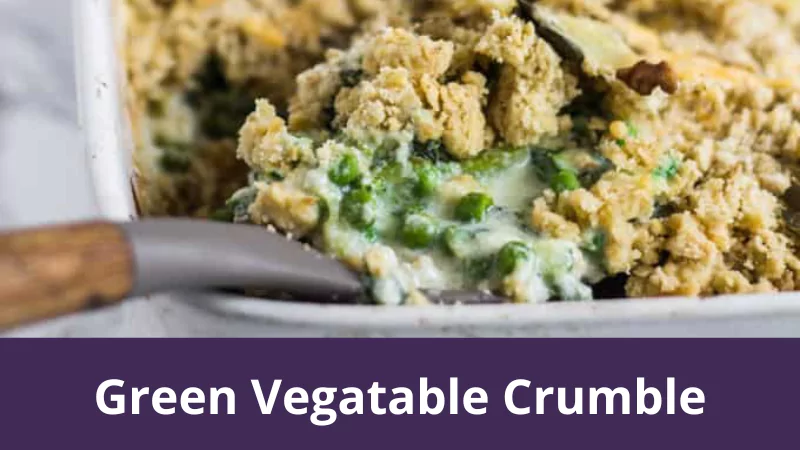
- Preheat the oven to 190C/375F/gas 5. Steam the vegetables in a steamer for 10 minutes or just cook. Drain the vegetables and squeeze any excess water out of the spinach. Pour the cooked vegetables and grated courgette into a large roasting or casserole dish and set aside.
- Next, make the white sauce: Melt the butter in a large saucepan over medium heat until frothing and just starting to smell nutty and turn a light golden colour. Whisk in the flour and allow to cook for a minute, then slowly drizzle in the milk, little by little, whisking constantly and making sure the milk is completely combined and mixture smooth before adding more in. Whisk in the stock, mustard, nutmeg or allspice and salt & pepper. Bring to the boil and allow to simmer for a few mins, whisking constantly. You should have a fairly thick white sauce. Take off the heat and stir through the grated cheese or nutritional yeast, then pour the sauce into the dish with the green vegetables and mix well.
- Finally, make the crumble: pour the flour, oats and salt into a food processor and pulse for 30 secs or so to break down the oats a bit and combine everything. Add in the cubed butter and pulse for another 30 secs or so until you combined with the flour but still leaving little chunks. Grab handfuls of the crumble mixture and squeeze, to help the butter form clumps, before topping the creamy vegetable mixture with it. Once the vegetables are completely covered with an even layer of crumble, scatter over some chopped nuts and seeds, and a little extra grated cheese, if using. Pop in the preheated oven for 25-30 mins, until the crumble topping is golden and cooked and the cheesy filling is bubbling up around the crumble. Serve on its own or with a green salad or fresh chopped tomatoes drizzled with extra virgin olive oil and a pinch of salt.