The Importance of the Folate Pathway: How Methylfolate Impacts Overall Health

Share This Post

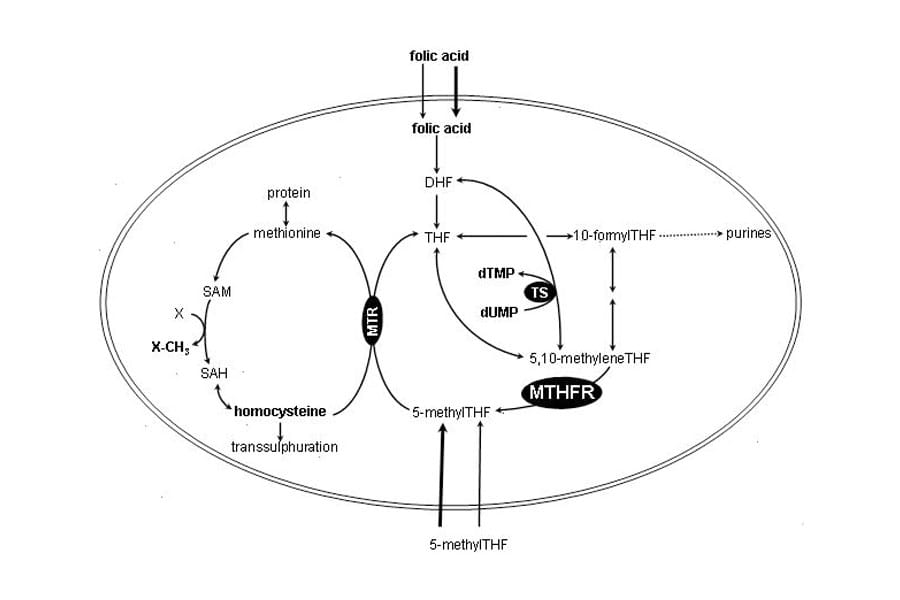
The folate pathway is one of the body’s most essential processes, affecting everything from cellular repair to neurotransmitter production. Central to this pathway is methylfolate, the active form of folate that drives many crucial functions within the body. However, when there are disruptions in methylfolate production—often due to genetic variations—our health can be profoundly impacted.

In this post, we’ll explore why the folate pathway is so crucial and how issues with methylfolate production can affect overall health, from mood regulation to cardiovascular wellness.

1. What is the Folate Pathway?

The folate pathway is a metabolic process that converts folate from our diet into its active form, methylfolate. This active form is critical for several functions, particularly methylation, a biochemical process that’s essential for DNA synthesis, cellular repair, detoxification, and neurotransmitter production.

Methylation requires the presence of methylfolate to produce SAMe (S-adenosylmethionine), a molecule that acts as a universal methyl donor. SAMe provides the “building blocks” for various processes, including mood regulation, liver detoxification, and healthy cell division. Simply put, without an efficient folate pathway, the body’s ability to function at an optimal level is compromised.

Would you like to read the full article?

This content is an exclusive benefit to Functional Genomics Institute members. PREMIUM MEMBERS GET ACCESS TO:

  • Premium Articles like this one regarding research updates, functional genetics and specific health concerns
  • Exclusive Ask Me Anything Forum
  • Bi-Monthly Q+A live calls with Carolyn Ledowsky
  • Full access to exclusive video trainings
  • Quarterly Deep-Dive Webinars and Case Studies

LEARN MORE

Already a subscriber? Login here

If you are a member who is logged in and are receiving this message, please ensure the cookies are enabled on your browser.

Related Posts

Conditions

Part 1:Vitamin B12 Absorption, Uptake, and Utilisation: Role of Transcobalamin II (TCN2)

Key points discussed: How Vitamin B12 is Absorbed, Transported & Utilised What is Transcobalamin II (TCN2) genes The Role of Genetic Variants in B12 Metabolism ...
Read More →
Upregulated methylation increases expression and proliferation of cancer cells??
Genes

Upregulated methylation increases expression and proliferation of cancer cells??

There is no question that the future of medicine will be in analysing a person’s genetics, with a detailed family history and addressing the genetic ...
Read More →
Folate Supplementation Guide
Folate

Folate Supplementation Guide

Folate Supplementation Guide You are looking to get pregnant and want to do all you can to ensure you have a happy and healthy baby. ...
Read More →
MTHFR

MTHFR and the Brain: Untangling the Genetic and Biochemical Links to Neurological and Psychiatric Disorders

When we talk about MTHFR polymorphisms, most practitioners think about methylation, cardiovascular risk, or pregnancy complications. But increasingly, the research is pointing to a different ...
Read More →
Bisphenol A: Why It’s Bad and How to Avoid It
MTHFR

Bisphenol A: Why It’s Bad and How to Avoid It

Bisphenol A: BPA or Bisphenol A is a common chemical found in plastics and has been in large scale industrial use since the 1960’s. This chemical ...
Read More →
Apps, Sulphur and do you have Pyroluria? Findings from the MABIM Conference
MTHFR

Apps, Sulphur and do you have Pyroluria? Findings from the MABIM Conference

By Carolyn Ledowsky The Chemical Heritage Foundation recently played host to the MABIM Conference. I travelled to Philadelphia, USA to attend the two day conference ...
Read More →
Scroll to Top
Carolyn Ledowsky

Stay Connected!

Sign up for our monthly newsletter with current MTHFR research, health tips, recipes, special offers and news about upcoming events including Carolyn’s live Q&A.

Subscribe