Top 20 Folate Containing Foods

Top 20 Folate Containing Foods

Share This Post

While MTHFR gene mutations can inhibit the conversion of folate you eat (dihydrofolate) into the active folate (5-MTHF), is it still vitally important to consume as much natural folate as you can through your diet.

Is it important to remember, a mutation in the MTHFR gene simply means a reduction in function, not that it has shut down completely! So, the more natural folate you consume, the more folate your MTHFR gene will have to convert into the all important active folate.

You can read more on the uses of active folate in the body on our ‘What is MTHFR’ page. 

Consuming your folate through the diet also reduces your reliance on supplementation, allowing your diet to provide the nutrition your body needs, just the way nature intended.

And remember, eating these folate-rich foods means you are also receiving the benefits from the many other nutrients and phytochemicals they contain. So eat up, and enjoy!

10 day FREE email course

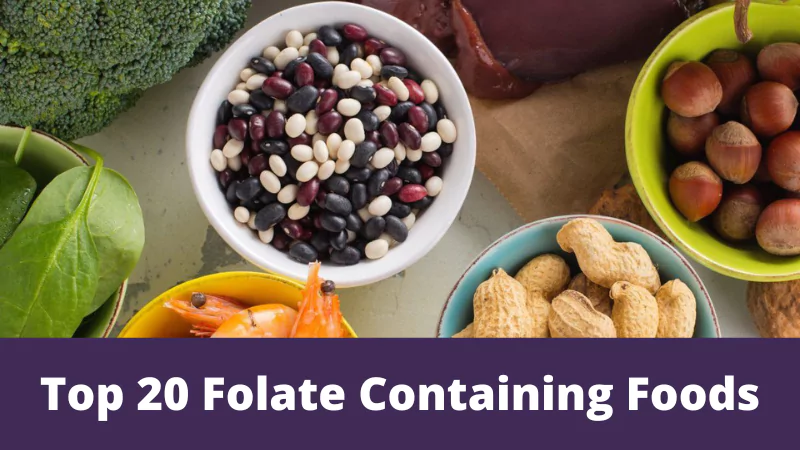
Top 20 Folate Containing Foods

(Content of natural folate in microgram’s per 100 gram serving of food)

  1. Duck liver (raw)                                              738mcg
  2. Mung beans (raw)                                          625mcg
  3. Chickpea /besan flour                                   437mcg
  4. Leek (freeze-dried)                                        366mcg
  5. Wheat germ                                                    281mcg
  6. Peanuts (raw)                                                 240mcg
  7. Sunflower seeds (toasted)                           238mcg
  8. Red capsicum/ peppers (freeze-dried)      229mcg
  9. Spinach (raw)                                                 194mcg
  10. Asparagus (frozen)                                        191mcg
  11. Mustard greens (raw)                                   187mcg
  12. Quinoa (uncooked)                                       184mcg
  13. Lentils (cooked)                                             181mcg
  14. Kelp seaweed (raw)                                      180mcg
  15. Collard greens (raw)                                     166mcg
  16. Lima beans (cooked)                                    150mcg
  17. Black beans (cooked)                                   149mcg
  18. Egg yolk (raw)                                                146mcg
  19. Cos or Romaine lettuce (raw)                     136mcg
  20. Kidney beans (cooked)                                130mcg

Information sourced from NutritionData.Self
10 day FREE email course


Related Posts

Conditions

What is the difference between genetics, genomics, and epigenetics?

Genetics refers to the study of individual genes and their role in inheritance—how traits and conditions are passed down from one generation to the next. ...
Read More →
Wild Caught Snapper with Wilted Greens
MTHFR

Wild Caught Snapper with Wilted Greens

INGREDIENTS: Serves 2 2 x 200 g (7 oz) wild-caught snapper fillets 10 g (2/5 oz) butter TERIYAKI GLAZE 60 ml (2 fl oz) tamari ...
Read More →
How do you know if you have a methylation problem?
Genes

How do you know if you have a methylation problem?

Methylation can be defined as a vital biochemical process which is required for the proper functioning of our body. It involves the addition of a ...
Read More →
How to find out if you have the MTHFR gene mutation
Genes

How to find out if you have the MTHFR gene mutation

How to find out if you have the MTHFR gene mutation? MTHFR is an essential enzyme involved in the metabolism of dietary folate and links ...
Read More →
HER-stamine? The Link Between Histamine and Estrogen
MTHFR

HER-stamine? The Link Between Histamine and Estrogen

The female hormone estrogen may play a role in the development of histamine intolerance. This seems plausible since women consist of the majority who suffer ...
Read More →
Oxalates and its effects on our health
MTHFR

Oxalates and its effects on our health

What are oxalates? Oxalates aren’t exactly well known compounds, but they can affect our health if our body doesn’t process it optimally. Oxalates are found ...
Read More →
Scroll to Top
Dr. Carolyn Ledowsky

Stay Connected!

Sign up for our monthly newsletter with current MTHFR research, health tips, recipes, special offers and news about upcoming events including Carolyn’s live Q&A.

Subscribe