You are B12 deficient when your serum B12 is <150 pmol/l according to our Australian Labs. But the reality is that this number is way too low and people who have a B12 level this low will surely show signs of neurological dysfunction. There is sufficient research to suggest that this level should be 500pmol/L or greater. [1]
Regardless of what you hear, vegetables and fruits are NOT good sources of Vitamin B12. The only true source of Vitamin B12 is meat and animal protein.
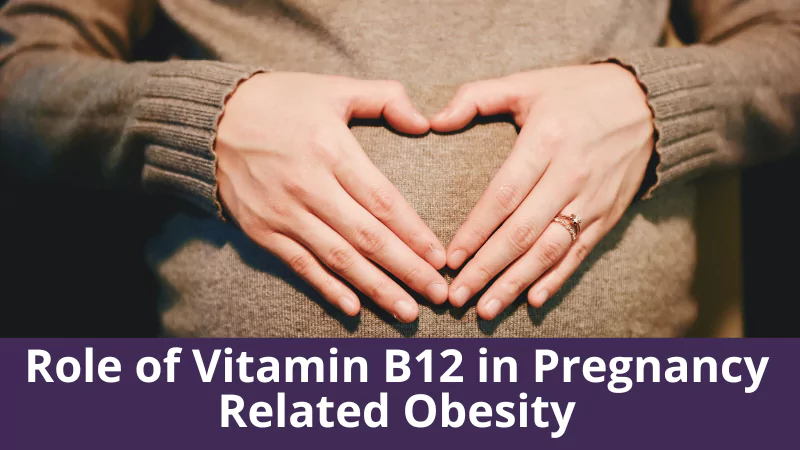
Ensuring that B12 levels are optimal during pregnancy will decrease the risk of reduced fetal growth, slow growth after birth despite high body fat content, early onset of type 2 diabetes mellitus, and cardiovascular diseases.
Benefits of B12 during pregnancy
Some of the benefits of taking B12 during pregnancy include:
- Increased metabolism
- Reduced chances of miscarriage
- Better weight management
- Prevent the onset of megaloblastic anemia in young pregnant women
- Provide protection against maternity related death
- Vitamin B12 provides protection against maternity related morbidity
- Reduced risks of other birth diseases such as neural tube defects [3]
Factors associated with maternal obesity
According to the Pregnancy Risk Assessment Monitoring System (PRAMS), data gathered within the last decade indicated an increase in pre-pregnancy obesity by up to 69%.
“Pre-pregnancy obesity increased 69.3% during the study period, from 13.0% in 1993 to 1994 to 22.0% in 2002 to 2003. The percentage increase ranged from 45% to 105% for individual states.”
Racial and ethnic factors directly influence weight gain during pregnancy, [4] One study says it’s due to the difference in diet, particularly in serum B12 amounts, between two races. In fact, this study claims Indian women are more likely to be obese during pregnancy than their White counterparts. Other factors which influence excessive weight are:
- Younger age
- Nonwhite
- Obese prior to pregnancy
- Unmarried
- Primiparous or bearing a child for the first time
- Lower socioeconomic status
Complications Associated with Maternal Obesity
Obesity is related to BMI which is calculated on the basis of body weight and height. Being overweight is measured between a score of 25-30 whereas a score greater than 30 is considered obese or extremely obese.
Obesity during and after pregnancy increases risk of certain mother and fetal related complications such as:
- Miscarriages
- Unexplained stillbirth
- Maternal obesity
- Including gestational proteinuric hypertension (preeclampsia) risk increase two fold with a 5-7 BMI increase.
- Diabetic prevalence increased in both pregestational diabetes and gestational diabetes mellitus (GDM) events due to increased insulin resistance.
- The chance and success of vaginal delivery decrease gradually with elevated levels of BMI.
- The cesarean delivery rate is increased almost two to three fold with increased BMI for both primigravid (first time mothers) and multigravid (experienced mothers).
- The operative delivery with obese women may increase the tendency of intraoperative complications such as infections and thromboembolic events.
- Fetal growth abnormality with an increased risk of cccc (NTD) in the offspring.
Role of Vitamin B12 in maternal obesity
There is a close association between lower serum B12 level and higher obesity and insulin resistance during pregnancy:
- HOMA-R, triglycerides, and AST are an indicator of adiposity or body fat metabolism. Adiposity or distorted body fat metabolism during pregnancy is associated with maternal nutritional deficiencies, specifically Vitamin B12 deficiency.
- Deficiency of vitamin B12 or lower serum level of vitamin B12 is linked with higher maternal BMI.
- Vitamin B12 deficiency is common and contributes to hyperhomocysteinaemia (increased plasma homocysteine). Researchers say body fat accumulation that happens when you’re obese may be associated with hyperhomocysteinaemia.
- Vitamin B12 is one of the essential micronutrients that plays an important role in the synthesis of nucleic acids and DNA methylation and lowers the risk of a range of malformations, including neural tube defects and cardiovascular abnormalities in the fetus. Researchers suggest B12 supplementation for obese women who are planning to become pregnant to reduce the risk of fetal abnormality.
In conclusion, maternal guidelines need to be strengthened enough to replace relatively cheap, energy dense but nutrient poor foods with a micronutrient rich diet. Always make sure you are monitoring your B12 levels.
References
- Bridget Ann Knight, Beverley M. Shields, Adam Brook, Anita Hill, Dattatray S. Bhat, Andrew T. Hattersley, Chittaranjan S. Yajnik; Lower Circulating B12 Is Associated with Higher Obesity and Insulin Resistance during Pregnancy in a Non-Diabetic White British Population; PLoS One. 2015; 10(8): e0135268. Published online 2015 August 19. doi: 10.1371/journal.pone.0135268; Retrieve from: http://www.ncbi.nlm.nih.gov/pmc/articles/PMC4545890/
- C. S. Yajnik, S. S. Deshpande, A. A. Jackson, H. Refsum, S. Rao, D. J. Fisher, D. S. Bhat, S. S. Naik, K. J. Coyaji, C. V. Joglekar, N. Joshi, H. G. Lubree, V. U. Deshpande, S. S. Rege, C. H. D. Fall; Vitamin B12 and folate concentrations during pregnancy and insulin resistance in the offspring: the Pune Maternal Nutrition Study; Diabetologia. 2008 January; 51(1): 29–38. Published online 2007 September 13. doi: 10.1007/s00125-007-0793-y; Retrieve from: http://www.ncbi.nlm.nih.gov/pmc/articles/PMC2100429/
- Molloy AM, Kirke PN, Brody LC, Scott JM, Mills JL.; Effects of folate and vitamin B12 deficiencies during pregnancy on fetal, infant, and child development; Food Nutr Bull. 2008 Jun;29(2 Suppl):S101-11; discussion S112-5; Retrieve from: http://www.ncbi.nlm.nih.gov/pubmed/18709885
- Meaghan A Leddy, Michael L Power, Jay Schulkin; The Impact of Maternal Obesity on Maternal and Fetal Health; Rev Obstet Gynecol. 2008 Fall; 1(4): 170–178; Retrieved from: http://www.ncbi.nlm.nih.gov/pmc/articles/PMC2621047/
- Arne Astrup; Effect of obesity on plasma homocysteine; Am J Clin Nutr October 2001
vol. 74 no. 4 558