How Mould Disrupts Biochemistry, Immunity & Detoxification

Share This Post

How Mould Disrupts Biochemistry, Immunity & Detoxification

Understanding the systemic impact of mycotoxins in clinical practice

Mould-related illness is often misunderstood as a localised respiratory issue, but in reality, mycotoxins disrupt the body at nearly every level. From mitochondrial damage to immune dysregulation and impaired detoxification, their effects are complex, far-reaching, and deeply biochemical. For health practitioners, understanding these mechanisms is critical to identifying and treating mould-affected patients effectively.

1. Mycotoxins: Small Molecules, Massive Impact

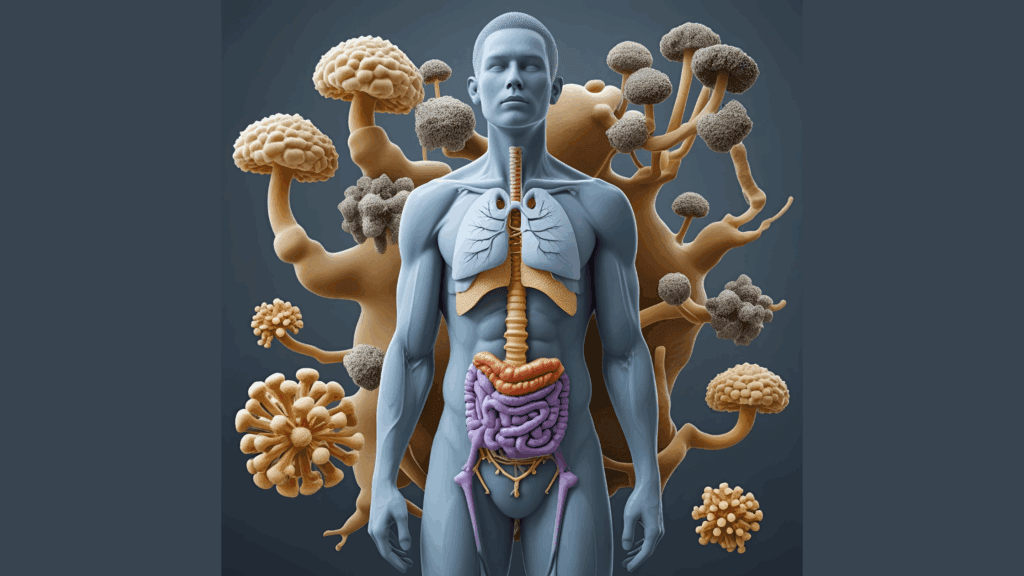
Mycotoxins are secondary metabolites produced by moulds such as Aspergillus, Fusarium, and Penicillium. Despite their tiny size—typically around 0.1 microns—they have profound systemic effects. Once inhaled, ingested, or absorbed, these toxins:


Would you like to read the full article?

This content is an exclusive benefit to Functional Genomics Institute members. PREMIUM MEMBERS GET ACCESS TO:

  • Premium Articles like this one regarding research updates, functional genetics and specific health concerns
  • Exclusive Ask Me Anything Forum
  • Bi-Monthly Q+A live calls with Carolyn Ledowsky
  • Full access to exclusive video trainings
  • Quarterly Deep-Dive Webinars and Case Studies

LEARN MORE

Already a subscriber? Login here

If you are a member who is logged in and are receiving this message, please ensure the cookies are enabled on your browser.

Related Posts

Did You Know? Creatine
MTHFR

Did You Know? Creatine

You may have heard of creatine before, probably for its ability to enhance athletic performance. But, did you know that creatine can also help improve ...
Read More →
Role of Vitamin B12 in Pregnancy Related Obesity
MTHFR

Role of Vitamin B12 in Pregnancy Related Obesity

You are B12 deficient when your serum B12 is <150 pmol/l according to our Australian Labs. But the reality is that this number is way ...
Read More →
American Heart Association should re-think their status on MTHFR mutations
MTHFR

American Heart Association should re-think their status on MTHFR mutations

Recently Stephan Moll and Elizabeth Varga wrote on Homocysteine and MTHFR Mutations in this months American Heart Association journal, while much of the information about homocysteine ...
Read More →
Conditions

What are some common SNPs or genes I should focus on initially?

To avoid overwhelm, start with these key SNPs and pathways: MTHFR (C677T, A1298C), MTR, TCN2: Affects folate metabolism and methylation.
Read More →
Golden Glow Bliss Balls
MTHFR

Golden Glow Bliss Balls by Teresa Cutter

Ingredients:150 g almond meal100 g desiccated coconut + extra for rolling2 tablespoons Healthy Chef Beauty Collagen2 teaspoons Healthy Chef Immune Support1 tbsp Healthy Chef Pure ...
Read More →
Neural Tube Defects Linked to MTHFR & COMT Genes
MTHFR

Neural Tube Defects Linked to MTHFR & COMT Genes

Anencephaly, spina bifida and encephalocele are the most common types of Neural Tube Defects (NTD’s), and develop due to the failure of the neural tube ...
Read More →
Scroll to Top
Carolyn Ledowsky

Stay Connected!

Sign up for our monthly newsletter with current MTHFR research, health tips, recipes, special offers and news about upcoming events including Carolyn’s live Q&A.

Subscribe