Depression and MTHFR

Depression and MTHFR

Share This Post

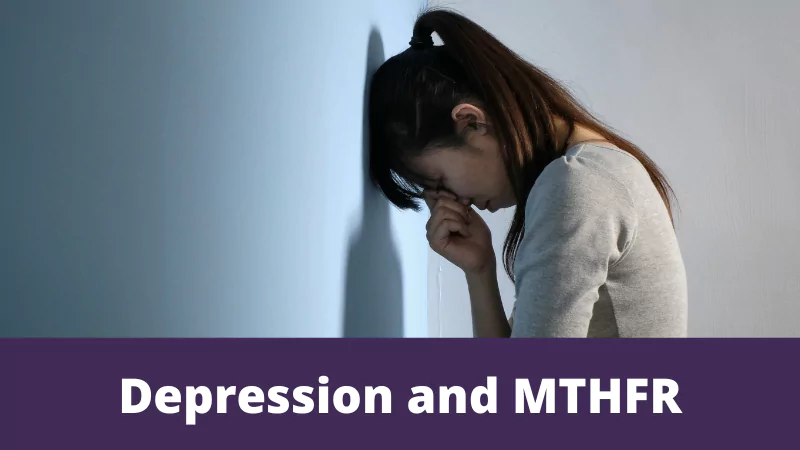
The Link Between Depression and MTHFR

Media attention has increased lately with the acknowledgement that high profile celebrities like Ian Thorpe and Charlotte Dawson have suffered greatly with depression. We have to ask ourselves why it seems so prevalent now. Are we detecting it more? Are we acknowledging it more?

No, I believe that the lack of folate plays a big part in this. We know that roughly 45% of the population is living with a MTHFR mutation. This means that folate levels are going to be low. If we include our folate-depleting lifestyles of high stress, high anxiety, lack of good nutrients, high alcohol then, then no wonder our folate is struggling!

All these factors above decrease our B vitamins levels to begin with, but it is again further compounded by a MTHFR mutation thrown on top of it – we can see it becomes really hard to catch a break!

In 2008 Stopien and his colleagues found that women who had the 677T mutation had a 3.47 increased risk of developing depression once they reached menopause (Article Here). That’s huge.  Earlier this year another study found that if you have low folate, high homocysteine levels and you combine it with an MTHFR C677T mutation; you are then more likely to have a major depressive disorder. This also was a major cause of having a higher BMI (Article Here).

So what are we doing to ourselves? We work too hard, we drink too much, we don’t cook good food like our grandparents used to eat, we have an increased percentage of the population that has an MTHFR mutation and so we have a cocktail for disaster.

I once read that if you put everyone on a good methylfolate supplement that was in a mental institution then half of them would probably walk out in a few months. I really wonder how true that might be.

Folate, Depression and MTHFR: food for thought isn’t it?
Picture Source:  Here

Related Posts

Conditions

My top 10 tips for keeping you healthy in 2024

1. Know your genetic susceptibility Consider what diseases are in your family.  By looking at your genetics you can make huge preventative steps so you ...
Read More →
Conditions

How Do SNPs Affecting Neurotransmitters, like MAO-A and COMT, Influence Mood and Anxiety in Patients?

Genomic medicine offers powerful insights into how genetic variations, such as single nucleotide polymorphisms (SNPs), impact neurotransmitter pathways, particularly in mood and mental health. SNPs ...
Read More →
Conditions

What are the ethical and legal considerations of working with genetic information?

Legal implications that practitioners should be aware of when working with genetic information include: Privacy and Confidentiality: Practitioners must comply with data privacy laws, such ...
Read More →
Histadelia vs. Histapenia
MTHFR

Histadelia vs. Histapenia

Histadelia vs. Histapenia: Does the Pfeiffer protocol always make sense? Understanding Your Histamine Blood Test Results Histamine is most popularly known for its role in ...
Read More →
Conditions

Genetic Susceptibility of Crohn’s Disease: Uncovering the Role of FUT2 and Other Key Factors

Crohn’s disease, a subtype of inflammatory bowel disease (IBD), presents complex challenges for both patients and practitioners. Despite advanced treatment protocols involving anti-inflammatory medications and ...
Read More →
MTHFR

When B-Vitamins Are Life-Saving: The Forgotten Diagnoses Behind Stroke, Dementia, and Psychiatric Decline

CBS and MTHFR deficiencies aren’t just rare childhood disorders—they may be hiding behind your adult patient’s “idiopathic” neurological symptoms. We often associate inborn errors of ...
Read More →
Scroll to Top
Dr. Carolyn Ledowsky

Stay Connected!

Sign up for our monthly newsletter with current MTHFR research, health tips, recipes, special offers and news about upcoming events including Carolyn’s live Q&A.

Subscribe