How to find out if you have the MTHFR gene mutation

How to find out if you have the MTHFR gene mutation

Share This Post

How to find out if you have the MTHFR gene mutation?

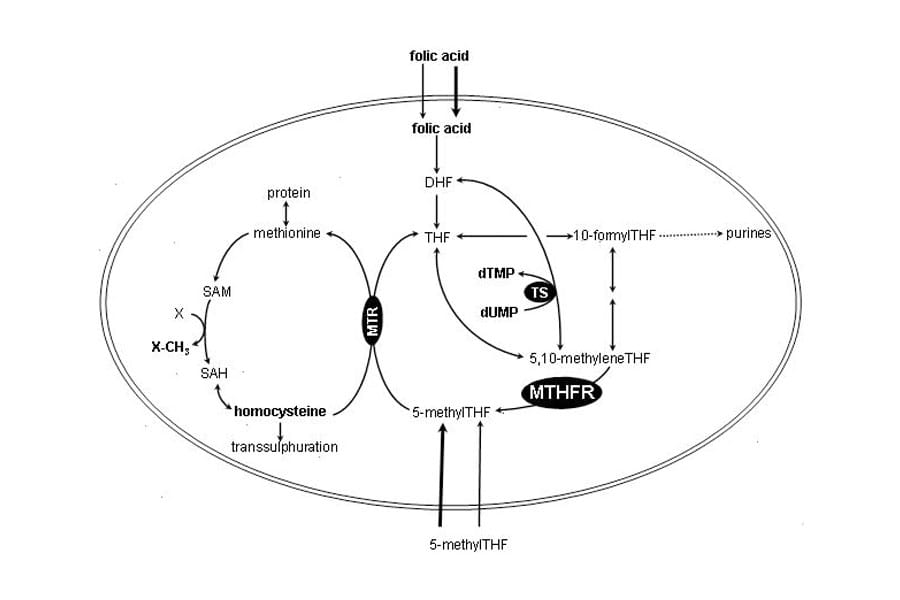
MTHFR is an essential enzyme involved in the metabolism of dietary folate and links the folate metabolism with the ‘homocysteine-methionine’ pathway. These pathways are important for optimal cellular functioning – synthesis of amino acids, proteins, lipids, DNA/RNA, gene switching, neurotransmitters, hormones, and immune function.

Since it is an important enzyme involved in the cellular metabolism, its deficiency may result in a variety of health conditions.

Over years of research, several conditions have been associated with a defect in MTHFR, some of which are listed below:

  • Neural tube defects- These are birth defects in the development of brain and spinal cord.
  • Anencephaly- It is a kind of neural tube defect in which large parts of the brain are missing.
  • Homocystinuria- A disorder in which the body is unable to process homocysteine and methionine properly.
  • Spina bifida- It is a kind of neural tube defect in which the spinal bones do not close completely around the developing spinal cord nerves.
  • Congenital heart defects
  • Recurrent pregnancy loss
  • Ischemic Stroke
  • Hypertension
  • Preeclampsia- High blood pressure during pregnancy
  • Glaucoma- An eye disorder.
  • Psychiatric disorders – Depression and/or anxiety
  • Certain types of cancer
  • Chronic Fatige
  • Fibromyalgia
  • ADD
  • ADHD
  • Autism

Steps to find out if you have the MTHFR gene mutation:

Step 1: If you suffer from any of the above and you are not able to treat it with regular treatments, you might have a mutation in the MTHFR gene.

Step 2: In addition, if you have high levels of homocysteine in your blood – more than 10µM/L – it may be an indication there is a  mutation in the MTHFR gene.  

Step 3: Talk with your Healthcare professional and discuss options for testing or go online and get your test here

Step 4: Once you know your results you can learn more about the MTHFR gene on the links below:

Step 5: Help to control your environment by watching what you eat, what you drink, what environmental toxins you are exposed to.

For more information see:

References:

  1. http://mthfr.net/mthfr-mutations-and-the-conditions-they-cause/2011/09/07/
  2. https://www.mthfrsupport.com.au/what-is-mthfr/

Related Posts

Anesthesia and MTHFR Mutations
Genes

Anesthesia and MTHFR Mutations

How do your genes affect anaesthetics? The effect of genes on anesthetics is a complex topic that is still being researched. However, some genetic variations ...
Read More →
Histamine Intolerance Histamine intolerance
Genes

HNMT Cofactors and Inhibitors

Histamine Intolerance Histamine intolerance (HIT) is a relatively common condition. The occurrence of HIT is increasing more these days, although the actual mechanism is not ...
Read More →
MTHFR

MTHFR and the Brain: Untangling the Genetic and Biochemical Links to Neurological and Psychiatric Disorders

When we talk about MTHFR polymorphisms, most practitioners think about methylation, cardiovascular risk, or pregnancy complications. But increasingly, the research is pointing to a different ...
Read More →
DIY Homemade Liquid Hand Soap
MTHFR

DIY Homemade Liquid Hand Soap

Ingredients: 1/2 cup castile soap liquid 1/2 cup distilled water 1 Tbsp Vitamin E oil (optional) 1 Tbsp sweet almond oil or olive oil or ...
Read More →
Conditions

The Importance of the Folate Pathway: How Methylfolate Impacts Overall Health

The folate pathway is one of the body’s most essential processes, affecting everything from cellular repair to neurotransmitter production. Central to this pathway is methylfolate, ...
Read More →
Preconception, Pregnancy and Folate
MTHFR

Preconception, Pregnancy and Folate

Preconception health. What is that!? Preconception care is what we call the preparation time a woman and man undergoes before they become pregnant. It’s all ...
Read More →
Scroll to Top
Carolyn Ledowsky

Stay Connected!

Sign up for our monthly newsletter with current MTHFR research, health tips, recipes, special offers and news about upcoming events including Carolyn’s live Q&A.

Subscribe