The CBS Bottleneck: How Betaine Restores Order in a Broken Pathway

Share This Post

If you think methylation is just about MTHFR and folate, think again. There’s a rare disease that forces us to reckon with the very fundamentals of sulfur metabolism—and it teaches us more than you’d expect about the broader landscape of chronic disease, longevity, and metabolic resilience.

Let’s talk about homocystinuria.

It’s rare—so rare that most clinicians will never see it. But if you care about methylation, neurodegeneration, cardiovascular risk, or even skeletal health, it’s a masterclass in what happens when this system breaks.

And there’s one compound—betaine—that deserves a closer look, not just as a treatment for this genetic disorder, but as a window into how we might support methylation and metabolic flexibility more broadly.

Let’s unpack the story.

A Quick Primer on Homocystinuria (and Why You Should Care)

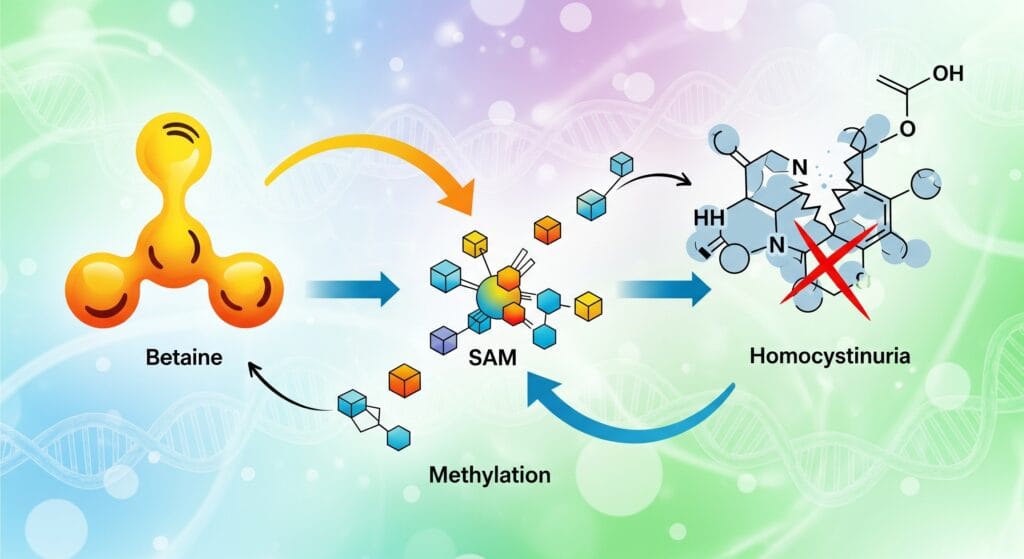
Homocystinuria is a genetically inherited disorder of sulfur amino acid metabolism. The most common cause? A deficiency in cystathionine-β-synthase (CBS), a critical enzyme that diverts homocysteine down the transsulfuration pathway toward cysteine.
Would you like to read the full article?

This content is an exclusive benefit to Functional Genomics Institute members. PREMIUM MEMBERS GET ACCESS TO:

  • Premium Articles like this one regarding research updates, functional genetics and specific health concerns
  • Exclusive Ask Me Anything Forum
  • Bi-Monthly Q+A live calls with Carolyn Ledowsky
  • Full access to exclusive video trainings
  • Quarterly Deep-Dive Webinars and Case Studies

LEARN MORE

Already a subscriber? Login here

If you are a member who is logged in and are receiving this message, please ensure the cookies are enabled on your browser.

Related Posts

Conditions

Taurine, Mitochondria, and SNPs: The Overlooked Role of a Sulfur Amino Acid in Mitochondrial Health

How polymorphisms in sulfur and antioxidant pathways may increase mitochondrial stress and taurine demand Introduction Mitochondrial dysfunction is a core feature of many chronic conditions ...
Read More →
Conditions

How does genomics apply to health and functional medicine?

Genomics enables practitioners to move beyond symptom-based treatment to address the root causes of health issues. By understanding a patient’s genetic predispositions and how these ...
Read More →
Chicken Liver, Mushroom, and Spinach Congee
MTHFR

Chicken Liver, Mushroom, and Spinach Congee

Ingredients: 1/4 cup sticky rice 1/4 cup jasmine or basmati rice 3 cups of water/ chicken stock 1 Tbsp of ground ginger 1 cube of ...
Read More →
MTHFR

The Science of Serotonin: How MAOA, BH4, and Inflammation Hijack Mood

Serotonin has become a household name. It’s often blamed for depression, and targeted by SSRIs. But as any functional practitioner knows, it’s rarely that simple. ...
Read More →
Coffee Metabolism and Your Genes
Genes

Coffee Metabolism and Your Genes

Coffee is one of the world most popular drinks, one can find dozens of coffee shops in virtually every town or city. The reason for ...
Read More →
Conditions

What are some common SNPs or genes I should focus on initially?

To avoid overwhelm, start with these key SNPs and pathways: MTHFR (C677T, A1298C), MTR, TCN2: Affects folate metabolism and methylation.
Read More →
Scroll to Top
Carolyn Ledowsky

Stay Connected!

Sign up for our monthly newsletter with current MTHFR research, health tips, recipes, special offers and news about upcoming events including Carolyn’s live Q&A.

Subscribe