Our Environments Are Artificial
In today’s age our environments are almost completely artificial, we have artificial light, artificial environments, artificial food (think packaged and fast foods), and artificial sleeping schedules. Our ancestors were not exposed to artificial light all day long. Our ancestors evolved to sleep and wake up with cycles of the sun, and were practically camping outside for most of our history as a species. Getting back into nature can do wonders for the body, because it takes the body back into a natural environment that the body understands. Your body does not understand how to regulate itself accordingly if you are constantly looking at a smart phone or TV when the sun is set. Exposure to artificial light is detrimental to our circadian rhythms by suppressing melatonin production; the hormone responsible for controlling your sleep/wake cycles. (1)
How Camping Can Reset Your Internal Clock
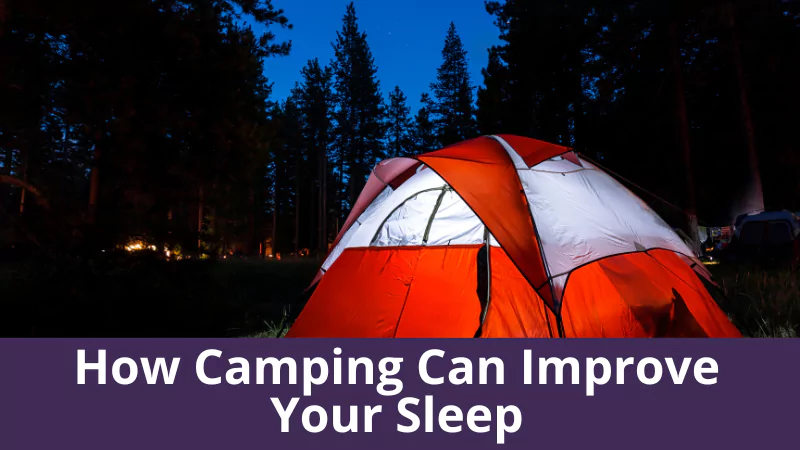
A great way to reset your sleep/wake cycle, or circadian rhythm, to a more natural and healthy state is to go camping for a couple days. You get the stress reduction and mental health benefits associated with being out in nature, and you get exposed to natural cycles of the sun. Going on a camping trip is an easy and fun way to get your sleep schedule back on track and reset your internal clock. This occurs when your pineal gland (the part of your brain which produces melatonin) is able to get back in tune with nature and start producing the appropriate levels of melatonin at the right time.
It does not take long for the body to reset its circadian rhythm. When you go camping, do not set an alarm and do not expose yourself to any artificial light after the sun begins setting. This method will give you the most and quickest results for resetting your circadian rhythm when camping. People who have circadian rhythms that are out of whack due to artificial light exposure or bad sleeping habits are more likely to have health problems such as sleepiness, mood problems, and have a much higher risk of being overweight. (2)
References
- Lewy, A. J., Wehr, T. A., Goodwin, F. K., Newsome, D. A., & Markey, S. P. (1980). Light suppresses melatonin secretion in humans. Science, 210(4475), 1267-1269
- Depner, C. M., Stothard, E. R., & Wright, K. P. (2014). Metabolic consequences of sleep and circadian disorders. Current diabetes reports, 14(7), 507.